Breaking the Physical Limits
We document the mechanical lineage of gaming machines. We track the history of physical limits. Every spinning drum faces absolute engineering constraints.
A steel reel can only spin so fast. It can only hold a set number of symbols. A physical cabinet holds a finite volume of coins. Inventors constantly tried to bypass these rigid physical laws. The industry shifted from heavy cast iron frames. It moved to electromechanical circuits and solenoid relays. It eventually transitioned to pure mathematics on digital screens. We explore this relentless technical progression.
The Cast Iron Genesis
We begin with Charles Fey in San Francisco. He built the famous Liberty Bell in 1895. This exact machine established the standard three-reel format. The mechanism relied entirely on springs and levers. Players pulled a heavy cast-iron side handle. This action tensioned a massive coiled spring inside the casing. The spring then kicked the three reels into motion. A mechanical timing clock mechanism stopped them one by one.
Early machines were incredibly heavy objects. They often weighed over forty kilograms each. They featured intricate cast-iron feet and ornate detailing. Saloon owners loved them immediately. The devices required absolutely zero dedicated staff. The machine handled the wager and the payout automatically. Fey installed them on a fifty-percent commission basis.
Tellingly, the Liberty Bell design was never patented by Fey. Consequences of this missing legal protection proved enormous. His rivals simply got hold of his machines and duplicated them. Reverse-engineering them carried no legal penalty at all. A major industry trend is explained by such open copying. One reason the three-reel layout spread so quickly lies here. Across the whole sector it grew uniform. Variations were churned out in bulk by makers such as the Mills Novelty Company.
We can map the initial visual language of the reels. Fey selected just five distinct stops for his drums. We list the original symbols below.
- Diamonds
- Hearts
- Horseshoes
- Spades
- The Liberty Bell itself
Three aligned bells triggered the grand jackpot. The machine dispensed exactly fifty cents for this rare combination.
Cigars and Chewing Gum
We saw strict anti-gambling laws sweep across America. Authorities cracked down on silver coin payouts. Our manufacturers needed a clever legal loophole. We started paying players with physical goods instead. Many local laws banned cash rewards completely. We stocked our games with alternative physical prizes. Early American machines dispensed the following items - Drinks - Cigars - Chewing gum packets
The trade-goods system required a clever mechanical bypass. Machines dispensed small tokens or printed trade checks initially. Patrons handed these checks directly to the bartender. The bartender exchanged them for a cigar or drink. Lawmakers quickly banned these trade checks as well. The machines had to dispense the goods directly.
We built surprisingly complex and heavy vending mechanisms. The gum packs required perfect feeding without jamming. This specific setup changed our pokies visual language forever. The Bell-Fruit Gum Company provided many alternative prizes. We adopted fruit symbols to represent our available gum flavours.
We linked our reel symbols directly to specific flavours. Our games offered these distinct payouts - Cherries for cherry gum - Melons for melon gum The famous 'BAR' emblem comes straight from this era. We borrowed the Bell-Fruit Gum Company corporate logo. These classic symbols survive on our modern pokies by pure historical accident.
Solenoids and Motors
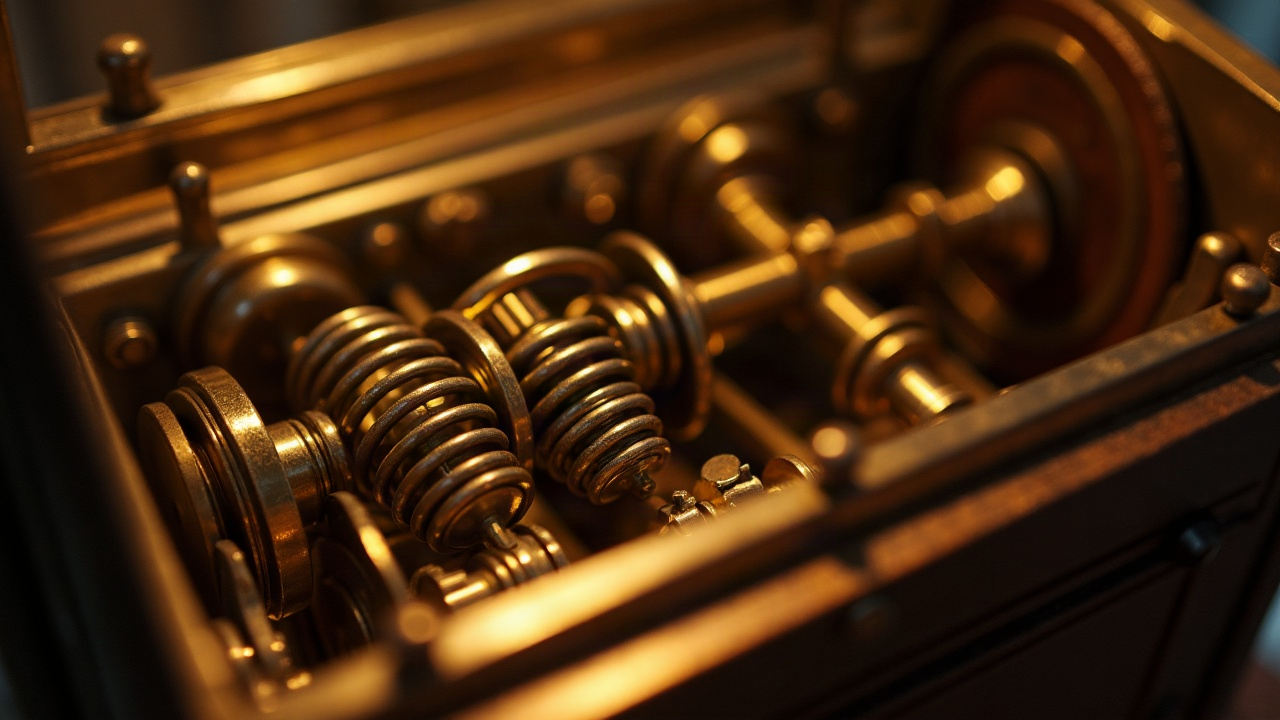
For nearly seven decades, purely mechanical machines held sway. Their physical mechanisms hit the absolute peak of engineering. The whole architecture was overhauled by Bally in 1963. A fresh machine named Money Honey was released. Gaming's first fully electromechanical device, this was. At last electricity took over from clockwork and pure spring tension. Metal and plastic drums still served as the physical reels. The stopping mechanisms, though, were now driven by electric solenoids.
The most crucial innovation was entirely hidden from players. Money Honey featured a motorised bottomless coin hopper. Older mechanical models relied on gravity-fed coin tubes. Those tubes could only hold around twenty coins. Larger payouts required a floor attendant to hand over cash. The electromechanical hopper solved this rigid physical limit.
Down at the base, a spinning disc stirred the pooled coins. As each one exited, a mechanical wiper arm tallied it precisely. Up to 500 coins could be paid by this bottomless hopper with no attendant present! Serious heavy-duty engineering was demanded by it. Considerable weight comes from five hundred silver coins. To turn that disc, the electric motor called for enormous torque. The mechanical load was borne by heavy steel springs and brass gears.
Archival Parts Index
We maintain price logs for authenticated reproduction parts. The following values apply to components currently in circulation. All amounts include GST.
- $145.00
Liberty Bell Cast Iron Handle
Reproduction side handle, unpainted.
- $85.00
Money Honey Hopper Assembly
Restored electromechanical microswitch unit.
- $25.00
Bell-Fruit Gum Decal Set
Period-accurate cabinet transfers.
- $40.00
Clockwork Timing Spring
Heavy gauge steel tension coil.
Erasing the Final Boundary
With the last transition, physical moving parts vanished altogether. In place of the mechanical drums, engineers fitted a video display. The physical limit on reel size was fundamentally broken by this one change. Only so many stops will fit on a spinning drum. On a standard physical reel, twenty-two stops is the ceiling. Extra stops mean the drum's diameter has to widen. And a bigger drum demands a physically larger steel cabinet. In public rooms, floor space is forever at a premium. Every bit of square meterage is what operators want to maximise.
We can display countless virtual stops on a television screen. Our digital reels just visually represent underlying computer code. We use a random number generator to select mathematical outcomes. A virtual reel could easily hold hundreds of stops. That single upgrade made our modern multi-line games possible! We could suddenly programme massive jackpots with astronomical odds.
Physical machines were largely limited to a single central payline. The video display allowed programmers to draw zig-zagging lines. The screen erased the final boundary between physical mass and theoretical possibility.